Insights
GEO vs SEO: Search Optimization Strategy for the AI Era
Published 2026-03-09
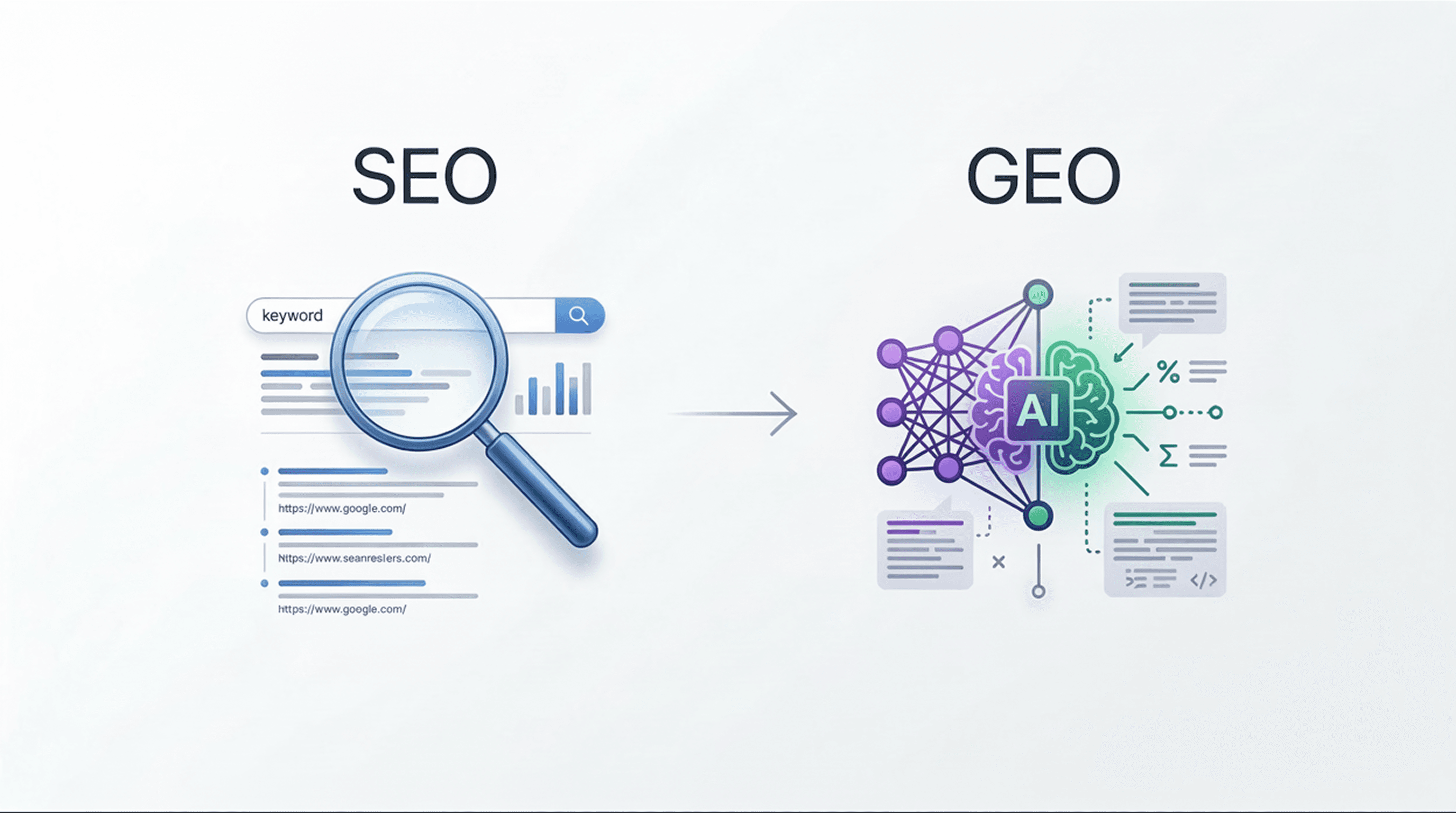
Key points
- GEO is an optimization strategy for being cited by AI search engines (GPT, Gemini, Perplexity)
- JSON-LD structured data (Article, FAQ, Citation) improves AI understanding
- Authoritative citations and E-E-A-T signals determine credibility
- llms.txt and ai.txt files provide explicit guidance to AI crawlers
GEO (Generative Engine Optimization) is a new strategy for optimizing content to be cited by AI search engines like ChatGPT, Gemini, and Perplexity. Key elements include structured data, authoritative citations, and E-E-A-T signals.
The Limits of SEO, The Rise of GEO
GEO was first defined in a 2024 paper by Princeton researchers[1], presenting a fundamentally different approach from traditional SEO.
How Traditional SEO Works
- Keyword-based page ranking
- Backlink authority scores
- Page speed, mobile optimization
- Meta tag optimization
Why GEO is Different
AI search engines generate direct answers rather than "a list of 10 links." To become content that AI references:
- Provide clear answers: Sentences that AI can easily cite
- Structured data: Explicit semantics via JSON-LD
- Authoritative sources: Credibility through citations
- Freshness: Regular updates
Core GEO Strategies
1. Structured Data (JSON-LD)
Extend the schemas recommended by Google's structured data guide[2] to optimize for AI crawlers:
{
  "@context": "https://schema.org",
  "@type": "TechArticle",
  "headline": "GEO vs SEO: Search Optimization for AI Era",
  "author": {
    "@type": "Organization",
    "name": "voidX AI"
  },
  "citation": [
    {
      "@type": "ScholarlyArticle",
      "name": "GEO: Generative Engine Optimization"
    }
  ]
}
2. FAQ Schema
AI is highly likely to use FAQ-formatted content as direct answers:
{
  "@type": "FAQPage",
  "mainEntity": [
    {
      "@type": "Question",
      "name": "What is GEO?",
      "acceptedAnswer": {
        "@type": "Answer",
        "text": "An optimization strategy for AI search engines."
      }
    }
  ]
}
3. Authoritative Citations
According to Search Engine Land's analysis[3], AI search engines trust these sources more:
| Source Type | Trust Level |
|---|---|
| Academic papers (with DOI) | ⭐⭐⭐⭐⭐ |
| Government/Institution reports | ⭐⭐⭐⭐⭐ |
| Official documentation | ⭐⭐⭐⭐ |
| News articles | ⭐⭐⭐ |
| Blog posts | ⭐⭐ |
4. AI Crawler Guide Files
/llms.txt - AI-specific site guide
/ai.txt - Citation policy specification
Strengthening E-E-A-T Signals
- Experience: Real usage experience, case studies
- Expertise: Author credentials (ORCID, certifications)
- Authoritativeness: Citations from authoritative sources
- Trustworthiness: Accurate information, regular updates
Prepare for the AI search era with MentionUp.
FAQ
What's the difference between GEO and SEO?
SEO focuses on ranking in traditional search engines like Google, while GEO optimizes content to be cited by AI search engines like ChatGPT and Perplexity.
What structured data is needed for GEO?
Article, FAQPage, Citation, and Speakable schemas are essential. FAQ content has a high chance of being used as direct AI answers.
What is an llms.txt file?
It's a guide file for AI crawlers that specifies site structure and content policies. Think of it as the AI version of robots.txt.
Can I apply SEO and GEO simultaneously?
Yes, GEO extends rather than replaces SEO. Adding GEO elements on top of good SEO foundations is most effective.
References
- Pranjal Aggarwal, Arvind Narayanan. GEO: Generative Engine Optimization. Princeton University, 2024
- Google Search Central. Introduction to Structured Data. Google, 2024
- Barry Schwartz. How AI Search is Changing SEO in 2025. Search Engine Land, 2025